Reports
OTTI’S FISCAL DISCIPLINE: HOW ABIA IS REWRITING THE STORY OF RESPONSIBLE GOVERNANCE

By the Office of, Dr. K. O. Nwaigburu – General Manager, Abia DMO.

Dr. K.O Nwaigburu GM ABIA DMO.
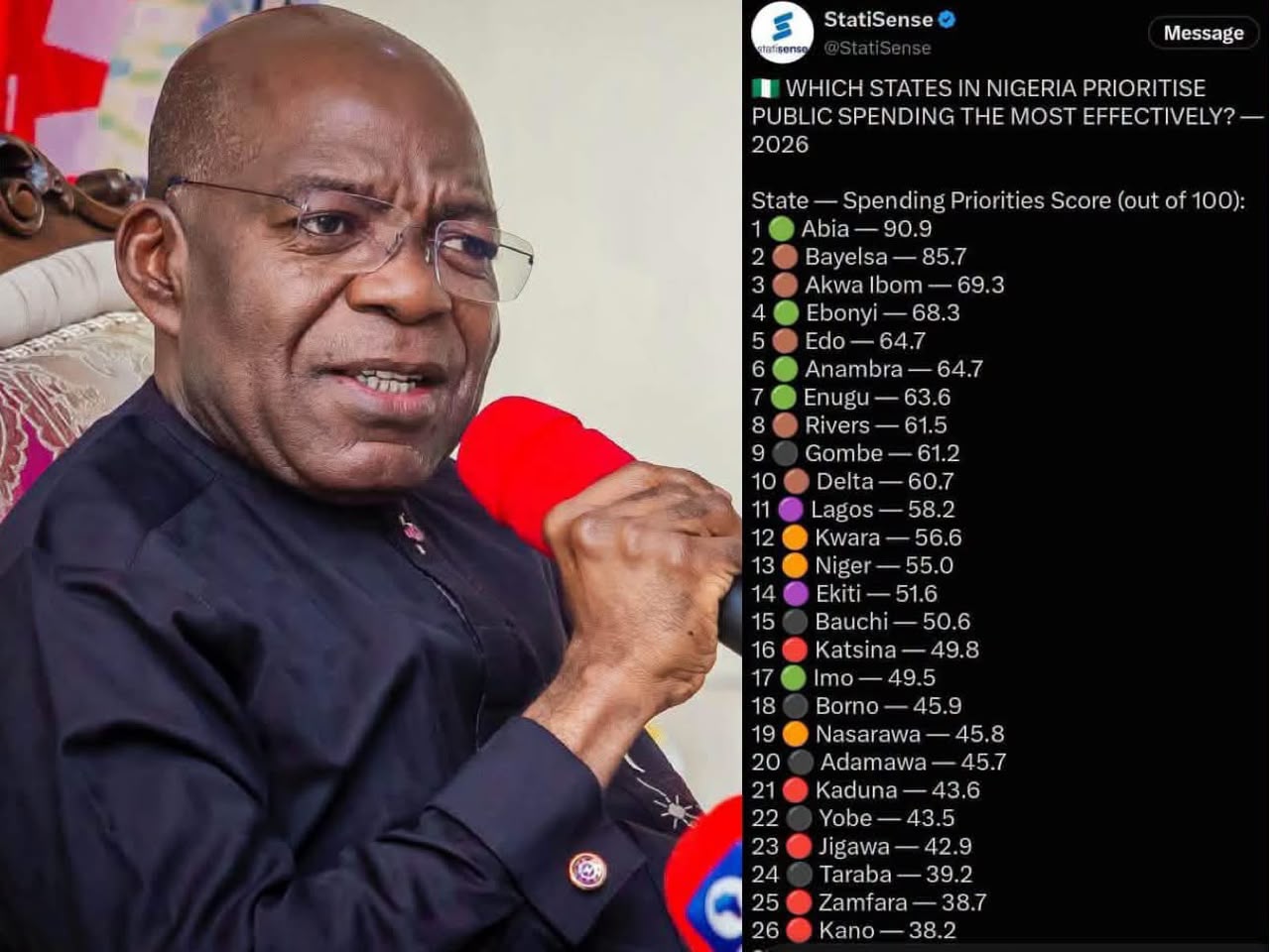
There is a compelling reason Abia State continues to attract attention in conversations about prudent public financial management and people-oriented governance. Beyond political narratives, public pronouncements and commendations, there are measurable fiscal developments that provide an important basis for assessing the direction in which the state is moving under the leadership of Governor Alex Chioma Otti, OFR.
As an institution concerned with the state’s debt sustainability, fiscal responsibility and the prudent management of public liabilities, the Abia State Debt Management Office has a professional responsibility to acknowledge and explain the significance of these developments. One of the most remarkable indicators of the administration’s fiscal direction is the substantial reduction in Abia State’s inherited debt burden.
When Governor Alex Otti assumed office in May 2023, the administration reported an inherited debt and liability burden of approximately ₦191.2 billion. By September 2026, the figure being reported by the Governor had declined to approximately ₦48.6 billion. This represents a remarkable improvement in the state’s reported debt position. The Federal Debt Management Office’s published statistics provide further evidence of the reduction in Abia’s domestic debt stock. Its records show that the state’s domestic debt declined from approximately ₦142.47 billion in June 2023 to ₦48.63 billion as at June 30, 2026. This represents a reduction of approximately ₦93.85 billion, or 65.9 per cent, in domestic debt alone. These are not campaign projections or political assumptions. They are figures contained in published debt statistics, which provide an important basis for evaluating the state’s fiscal management.
It is particularly important to appreciate what this achievement represents. Debt reduction is not simply about reducing numbers on government balance sheets. It is about creating fiscal space, reducing the pressure of debt obligations on public finances, improving the state’s capacity to meet competing development needs and protecting future generations from the consequences of unsustainable borrowing.
This is where Governor Otti’s economic background and understanding of public finance become particularly relevant. A first-class economist who understands the relationship between public expenditure, revenue generation, investment and long-term economic sustainability, Governor Otti has demonstrated a governing philosophy that places considerable emphasis on fiscal discipline and the prioritisation of public resources.
The Otti administration is making a strong case for the principle that government does not have to spend recklessly to demonstrate performance. Rather, government must understand where resources are most urgently required, allocate them responsibly and insist on value for every naira committed to public expenditure. This is the distinction between responsible governance and the wasteful management of public resources.
For years, Abia endured the consequences of poor fiscal decisions, weak institutional accountability and the apparent disconnect between public resources and the expectations of ordinary citizens. The state possessed enormous human and economic potential, yet the benefits of governance were not sufficiently reflected in the quality of public infrastructure, institutional development and general living conditions. The contrast with the current direction of governance is increasingly significant.
Today, Abia is witnessing renewed attention to infrastructure, healthcare, education, security, public-sector reforms, urban renewal and the restoration of institutional credibility. These priorities require substantial financial commitments, but the fundamental question is whether such commitments are justified by their public value and long-term benefits.
The administration’s approach suggests that expenditure must be purposeful, measurable and connected to development outcomes. This is not an argument against borrowing altogether as responsible borrowing, particularly for productive infrastructure and projects capable of generating long-term economic benefits, can be an important instrument of development. What matters is the purpose of the borrowing, its cost, repayment capacity and the value it ultimately delivers to the people.
Indeed, the state’s external debt obligations and ongoing multilateral project financing must also be transparently monitored as part of a comprehensive assessment of debt sustainability. Fiscal responsibility requires that every category of liability, including domestic and external obligations, is properly accounted for. The broader lesson is that a government must not mortgage the future simply to create an illusion of present prosperity. Governor Otti’s emphasis on fiscal prudence is therefore a welcome departure from the politics of indiscriminate expenditure. It demonstrates an understanding that the resources available to government are public resources and must be treated with the highest level of responsibility.
There is also a wider economic implication to this direction. A state that improves its debt sustainability, strengthens financial management and maintains discipline in public expenditure is better positioned to attract investment, support productive economic activities and create an environment in which businesses and individuals can thrive. For Abia, this is particularly important. Our state has the human capital, entrepreneurial energy and commercial heritage to compete favourably within Nigeria and beyond. What is required is an enabling environment supported by credible institutions, functional infrastructure and sound economic management.
It is against this background that the administration’s performance deserves recognition. Abia, which was once popularly described as first in letters and last in performance, is gradually working to dismantle that unfortunate reputation. The objective is no longer merely to occupy a position in the alphabetical order of Nigerian states, but to establish a credible position in the delivery of responsible governance, institutional reforms and sustainable development.
The task is far from complete, and there is still considerable work to be done. However, acknowledging measurable progress is not an act of political favouritism; it is an exercise in responsible public assessment. As witnesses to the state’s evolving fiscal management, we consider the reduction in its reported debt burden an important development that deserves recognition, sustained monitoring and consolidation.
Governor Alex Chioma Otti has demonstrated that leadership requires more than political authority. It requires economic understanding, courage to make difficult decisions, discipline in the management of public resources and an unwavering commitment to the public good. The journey towards a financially stronger and economically prosperous Abia must continue. Debt sustainability must remain a priority, transparency must be strengthened, and every naira saved or committed must ultimately translate into tangible benefits for the people.
Indeed, this is what responsible governance demands. May the economic vision and development-driven leadership of Governor Alex Chioma Otti continue to translate into lasting prosperity for our dear state. May Otti keep happening to Abia.